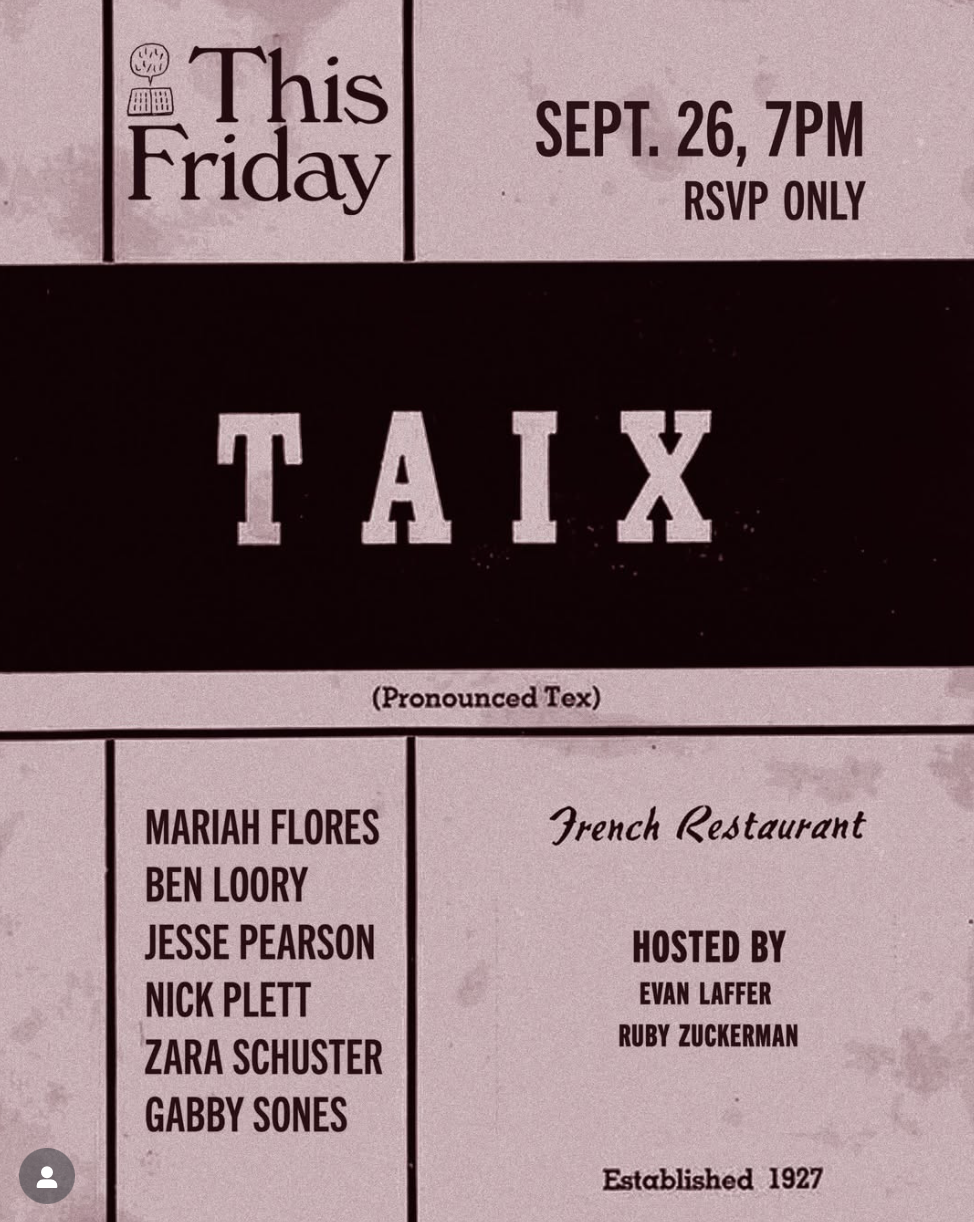
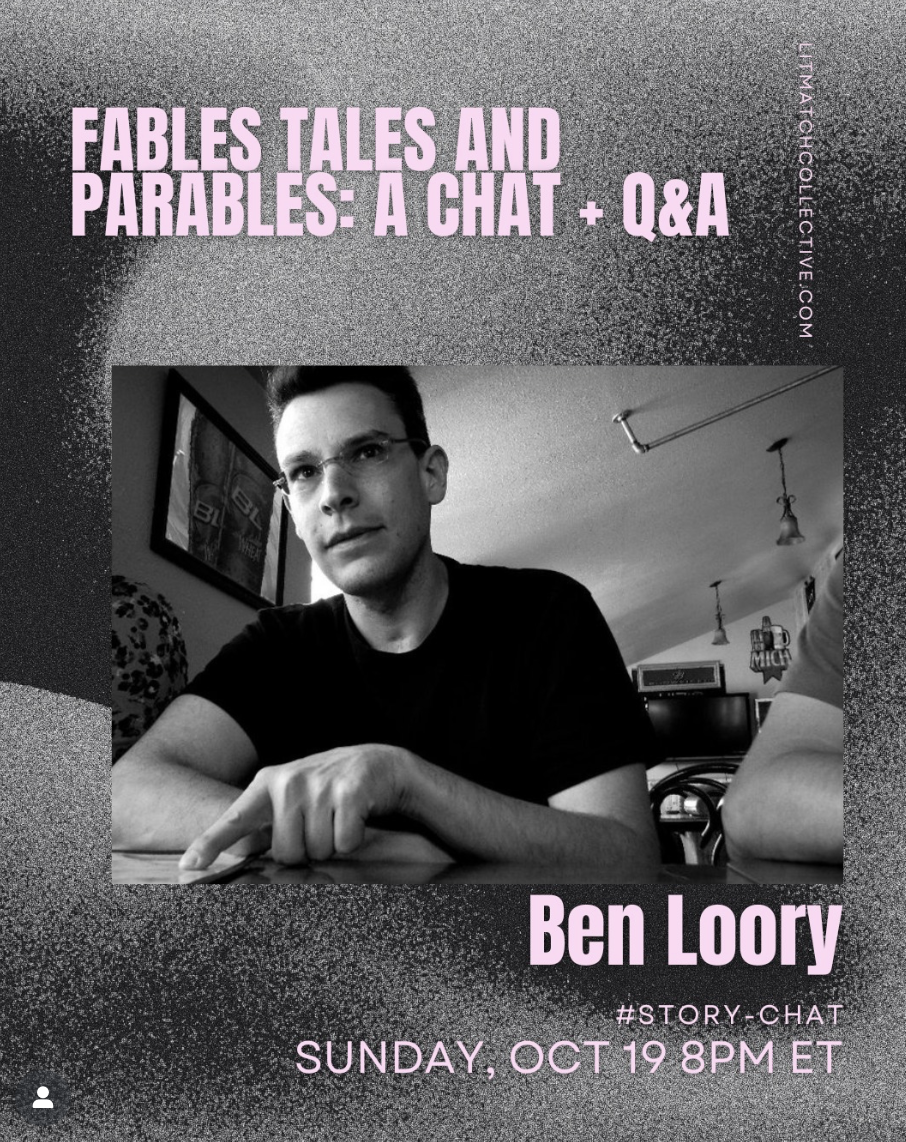
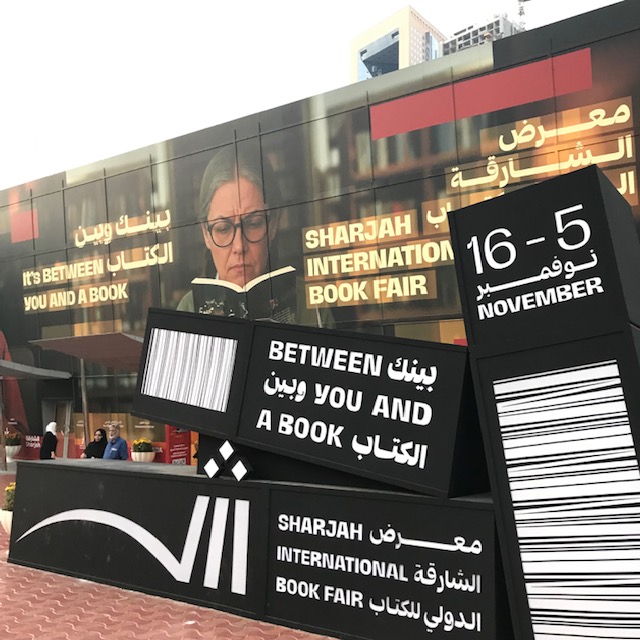
It’s hard to say what I did in 2025! Doing anything at all felt like trying to fly a paper airplane in the middle of a rainstorm. But I’ve looked through the records, and here’s what I managed to scrounge up: I did five public readings in 2025: In March, at the Same Difference reading series at LA’s Angel City Zen Center, in September at Echo Park’s landmark Taix Restaurant for the This Friday reading series, in October at a delightful Author Talk at the Pasadena Village (thanks to Helen Kraus and Jim Hendrick!), online as a featured reader at Lit Match Collective, and then finally, in November, as a Guest Author and Panelist (“Magic in the Everyday”) at the Sharjah International Book Fair in the United Arab Emirates, and at Our English High School in Dubai.


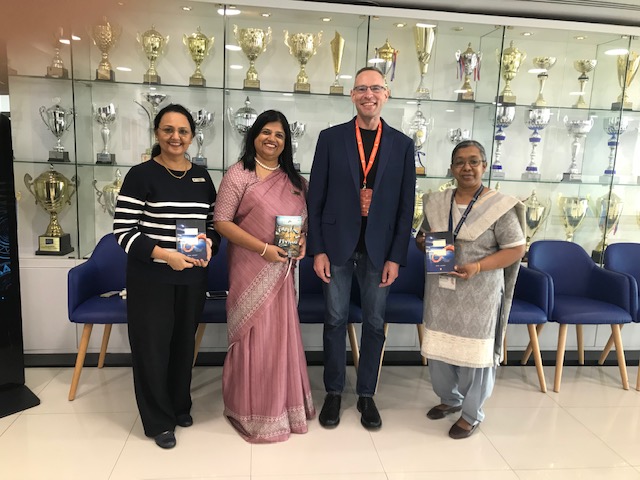
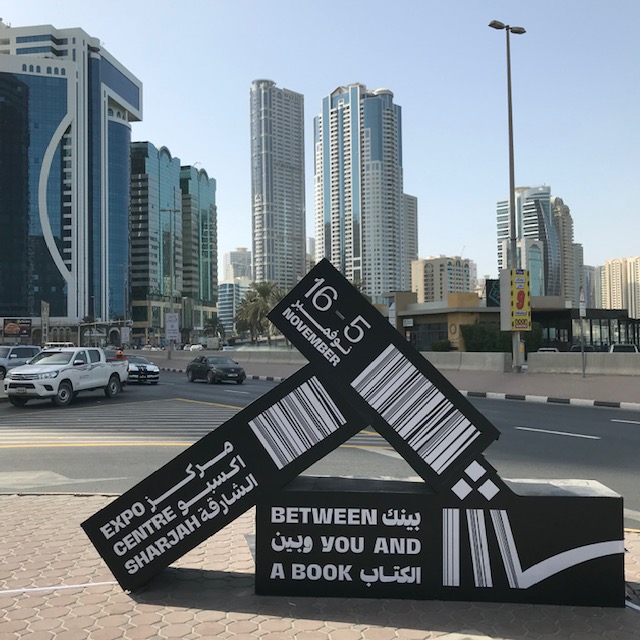

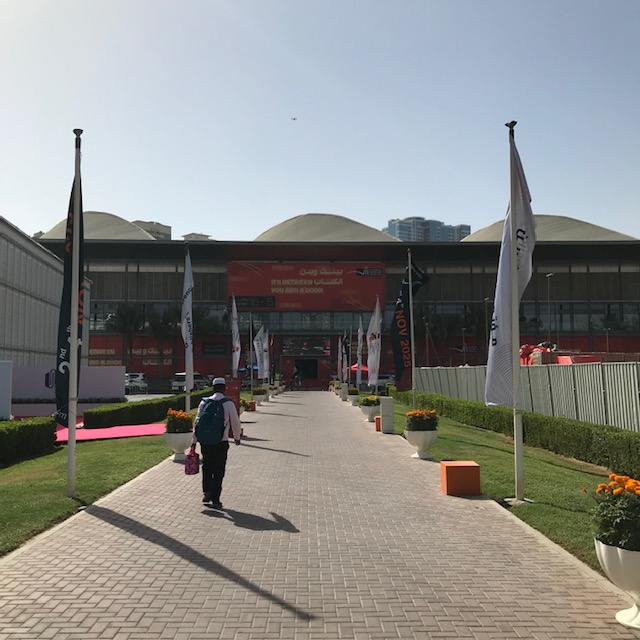
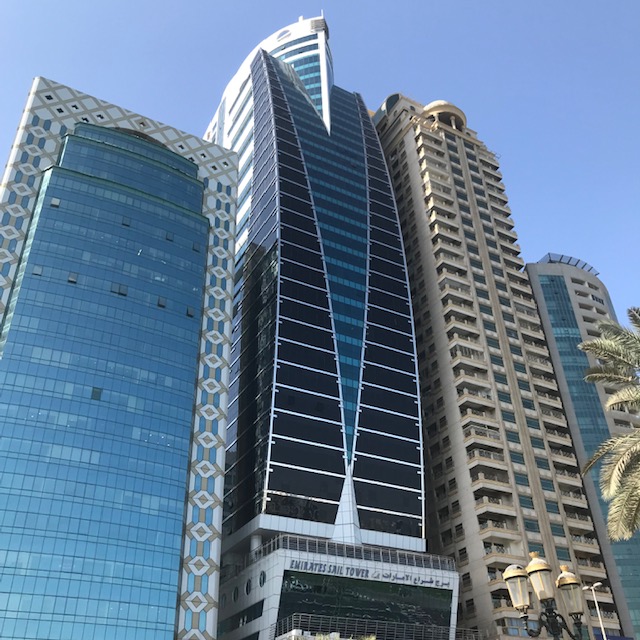
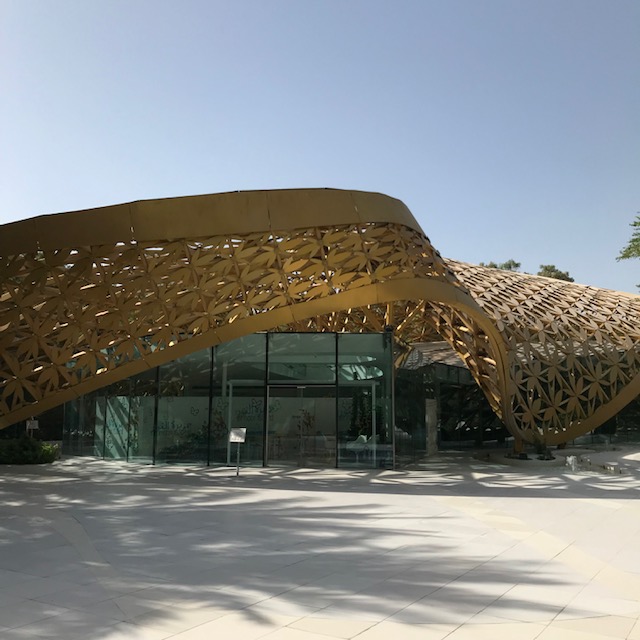
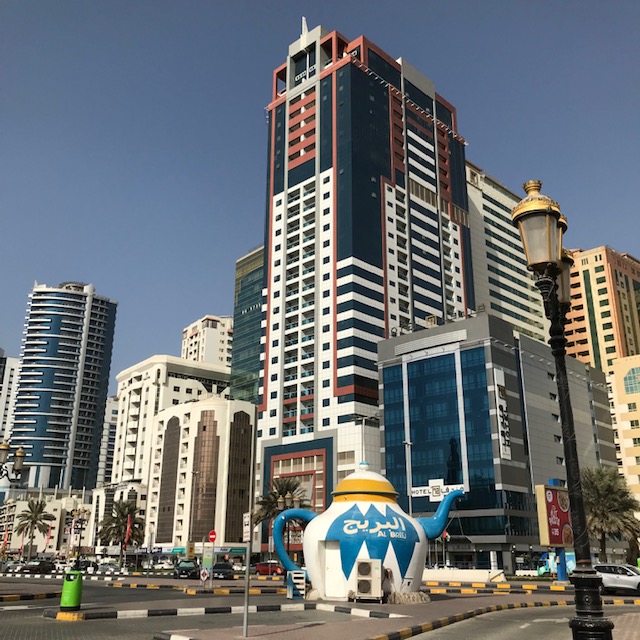
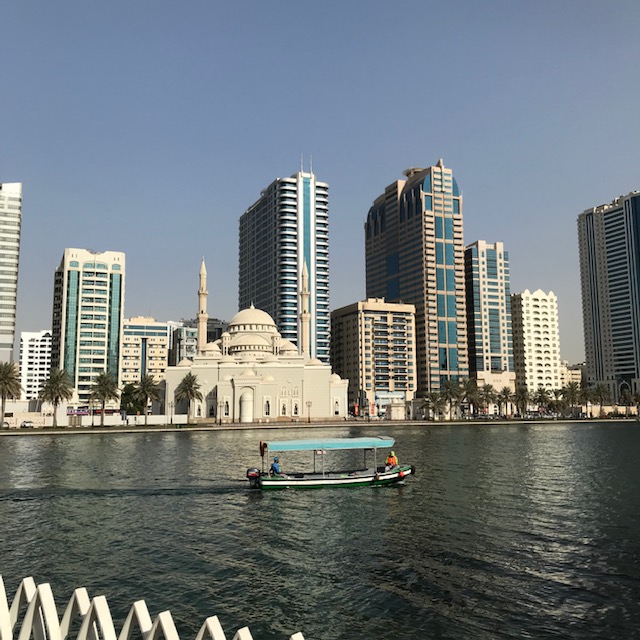
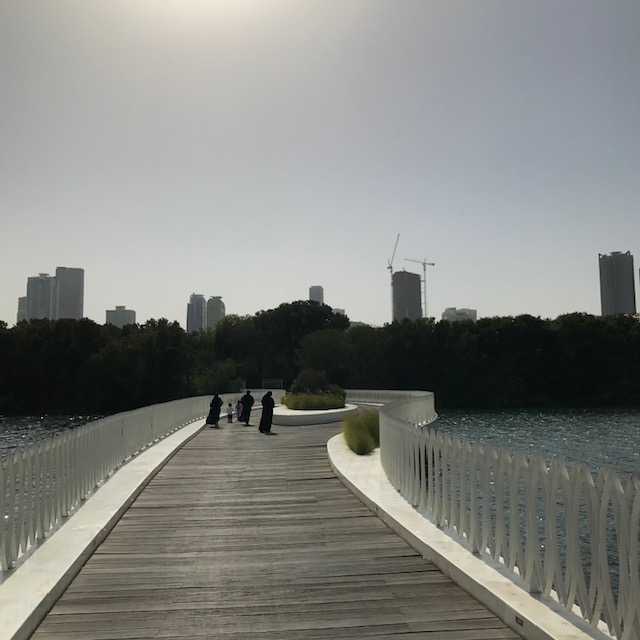
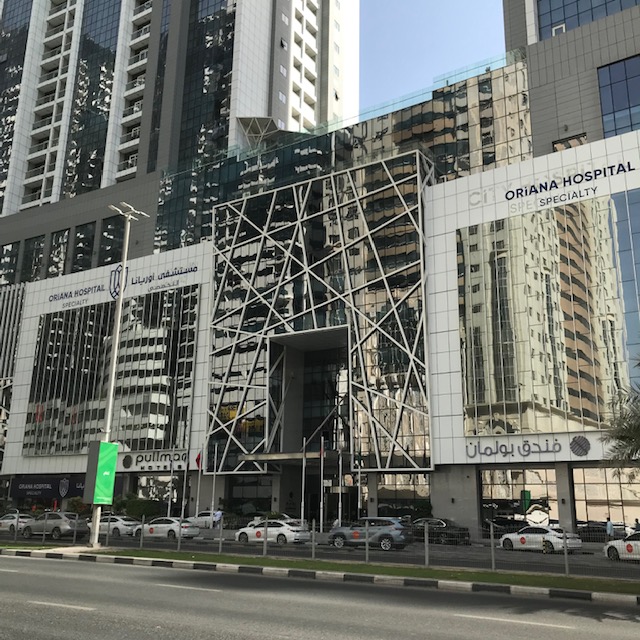
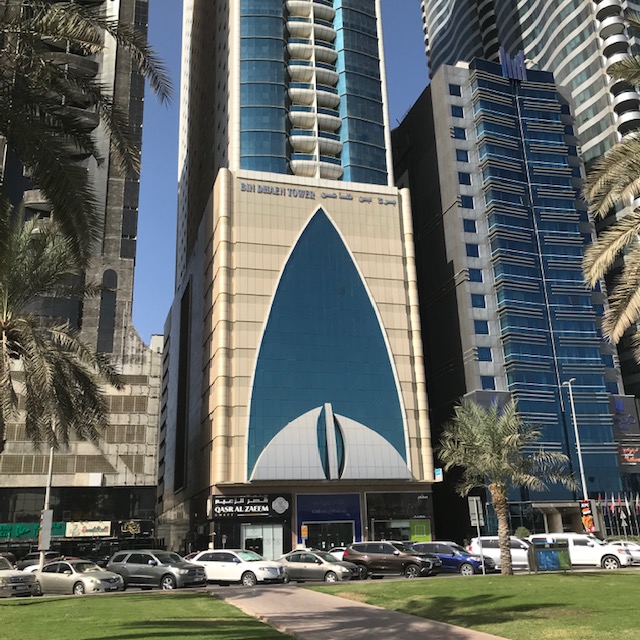
The United Arab Emirates was pretty cool! I expected it to be about 2000 degrees, but it was about the same as Los Angeles, high 80s/low 90s, with even less humidity (though infinitely more smog?). It felt a little bit like visiting the future—an endless city of gleaming white skyscrapers—only a future in a completely barren desert (while also on the sea!). I walked about 15 miles a day around Sharjah and never saw a single instance of graffiti (or a couple holding hands or kissing, for that matter; apparently they have laws about that). I was asked for directions everywhere I went (almost always, it seemed, by Dutch tourists), and actually got pretty good at giving them. I’d completed the Duolingo Arabic course before I went, and was surprised to find I could read all the signs and maps and pamphlets; on the other hand, I couldn’t understand a single word anyone said, let alone even begin to say anything back. Luckily, the whole country spoke English (and most people, better than me). Here are a few other pics I took while out on my travels (I resisted the urge to post every painting in the Art Museum, but if you ever go to Sharjah, it’s a good one):

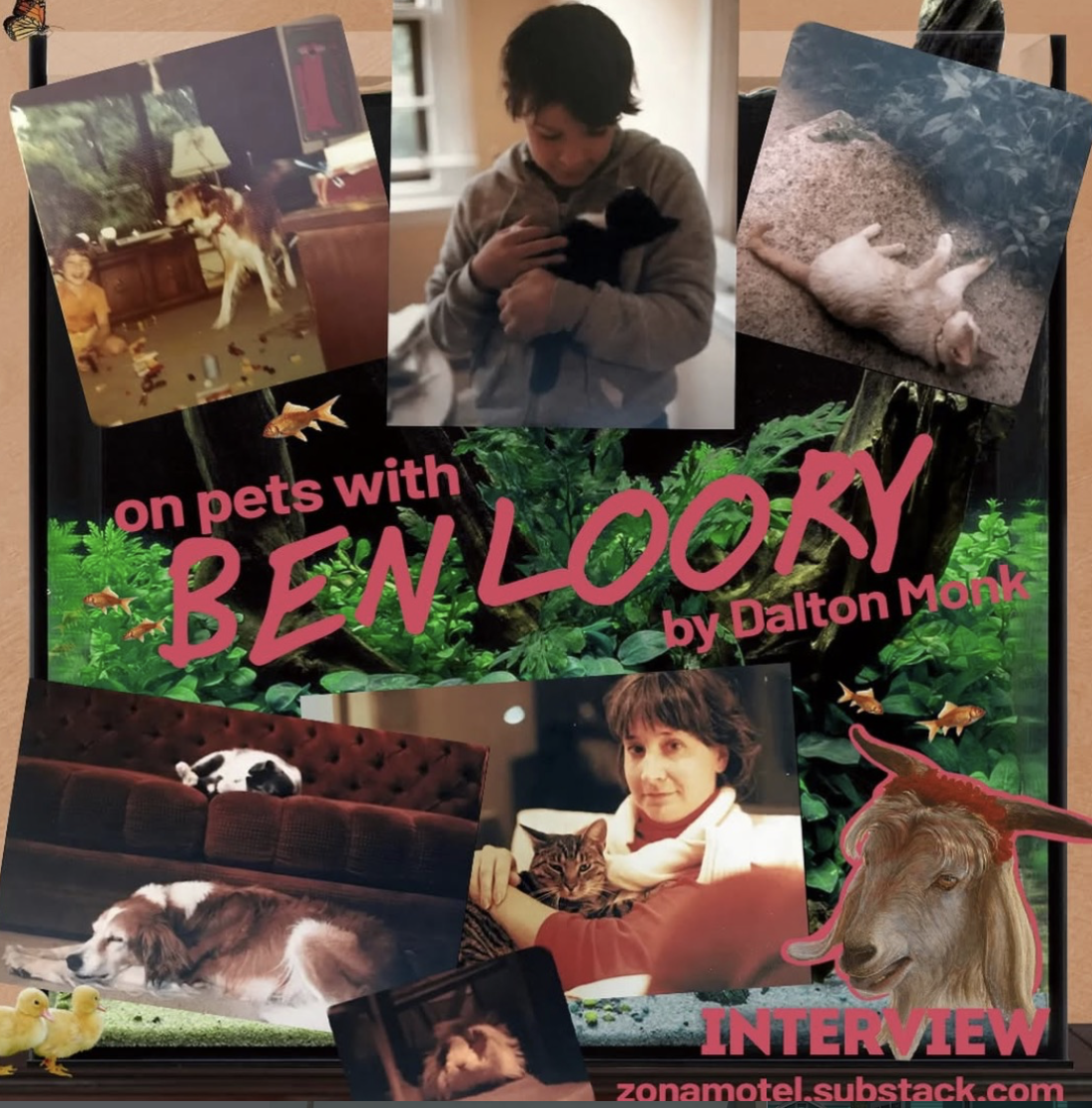
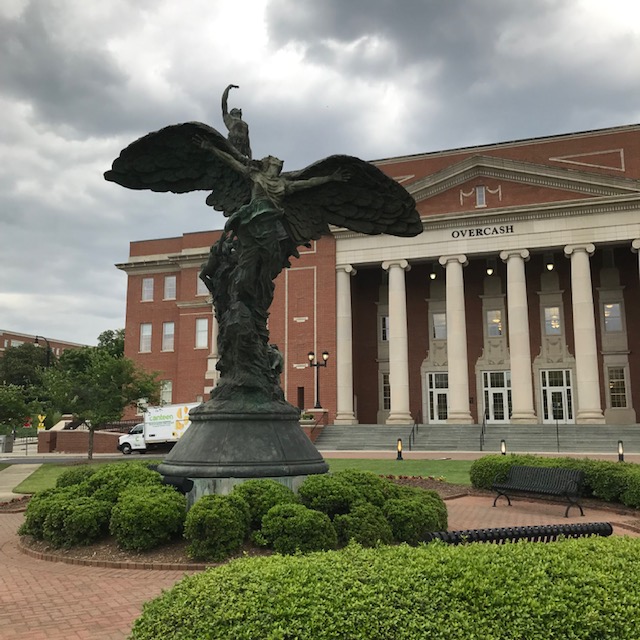
What else? I flew out to Charlotte, North Carolina to see a live performance of all of composer Nathan Hudson’s classical compositions based on or inspired by my stories (you can buy a full album of that music here, btw), was a judge for the Omega Sci-Fi Project’s 10th Anniversary High School Fiction Contest, taught approximately ten thousand classes, was interviewed about my childhood pets by Dalton Monk over at Zona Motel, and appeared on the Humming Fools Podcast (Episode #97), interviewed by Kyle Stück. My story “The Vatican” (which first appeared online in Electric Literature) was performed by Tony Award-winning actor Santino Fontana at the Stissing Center in Pine Plains, NY, as part of the Selected Shorts on Tour program, and three of my other stories (“The Man, the Restaurant, and the Eiffel Tower,” “The Book,” and “The Man and the Moose”) popped up on the Selected Shorts podcast (on the episodes “Sizzling Summer Travels,” “Reading Between the Lines,” and “Perfectly Unmatched,” respectively).
Time to brag about my students! I had past or present students publish stories in the Mississippi Review, Terrazzo Editions, Fairy Tale Review, Short Story Long, Craft Literary, Epoch, Tractor Beam, Greensboro Review, HAD, New Millennium Fiction, New England Review, Johnny America, the Mason Jar Press Jarnal, and Zoetrope All-Story, among others. Past student Emily Hunt Kivel’s debut novel Dwelling came out from FSG, and Greta Morgan’s memoir The Lost Voice was published by HarperOne. Daniel Pope’s Go Help Yourself is coming in 2026 from The University of New Orleans Press, and Tlotlo Tsamaase’s House of Margins is on the way from Erewhon Books (with her YA duology The Bloodwinds coming soon after that from Knopf). I’m sure there are others that are slipping my mind at the moment! If yours is one of them, please let me know so I can brag about it here.
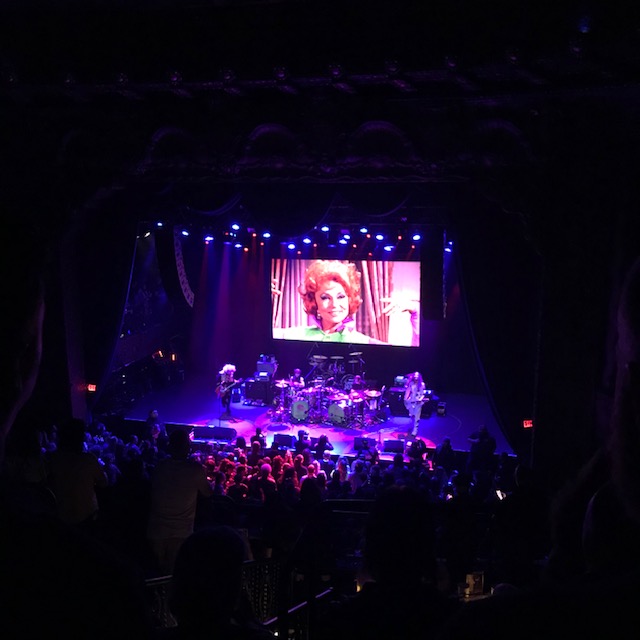
In personal news, I finally saw the Melvins again, after 6-7 years of not seeing them (I used to see them live at least 2-3 times a year), and am happy to report they are still incredible (though I do miss the days when Buzzo played a Les Paul). I also saw the Murder City Devils for the first time ever on their reunion tour, enjoyed an array of Baroque pieces (including some amazing Legeti stuff!) at the Colburn School, and heard some lovely Christmas Choral Music at the Disney Hall. It’s nice to see live music again! Even though I still can’t say I like breathing other people’s air.
I don’t know what’s going to happen in 2026, but I do know two things: 1) My story “The Duck” (from Stories for Nighttime and Some for the Day) will be read by Sonia Manzano (from Sesame Street) at the Mahaiwe Performing Arts Center in Great Barrington, MA, on February 13, as part of the Selected Shorts “Lovers & Strangers” show (tickets available here), and 2) My story “The Book” will be appearing in a new Library of America volume entitled American Flash Fiction: An Anthology, edited by David Ulin, alongside work by Mark Twain, Hemingway, Lydia Davis, and Donald Barthelme, among others. I’ve always loved the Library of America (at the moment, I’m working my way through the second volume of their Crime Novels of the 1960s: Nine Classic Thrillers set), so this is not just an honor, but a really big deal to me—“Made it, Ma! Top of the world!” etc.

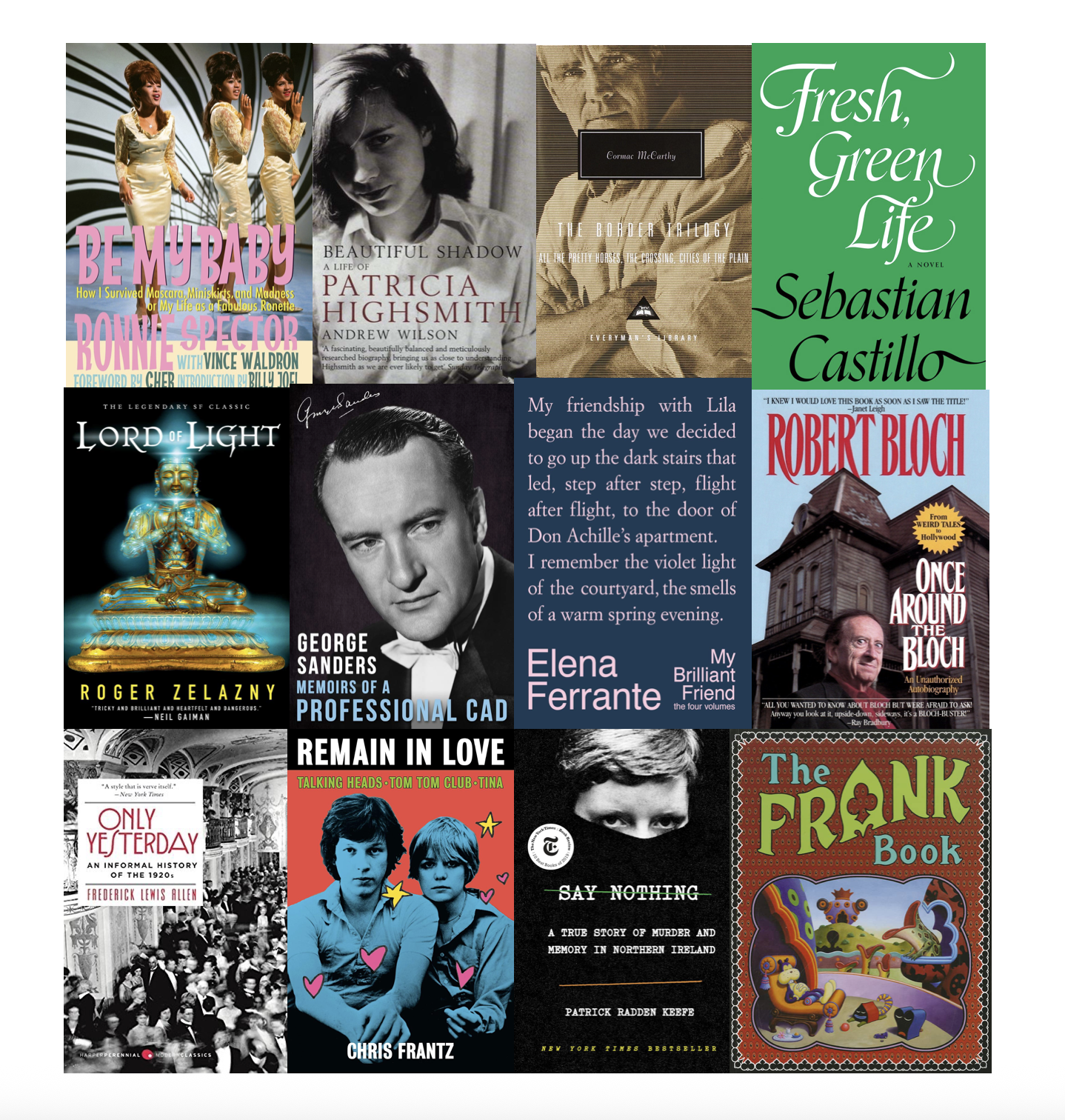
Reading-wise, I had a pretty good year. I read 103 books. My hands-down favorite was Jim Woodring’s The Frank Book, an impossible-to-describe collection of wordless surreal/metaphysical comics (about a cat (??) named Frank trying to make sense of/control his/the world) that made me feel like I was floating smoothly but swiftly upward and off this godforsaken planet—But to where?? To where?? I really can’t possibly recommend this book enough (unless you’re one of those people who’s into, uh, highly understandable things). My other favorite reads of the year were Be My Baby: A Memoir by Ronnie Spector (listen to the audiobook, it’s read by Rosie Perez, and she is amazing—it’s one of my favorite audiobook performances ever, right up there with Matt Godfrey’s reading of Michael McDowell’s Blackwater and Marina Abramovic’s reading of her own memoir Walk Through Walls), Roger Zelazny’s Lord of Light (I’ve never been a huge Zelazny fan, but the ideas in this novel still dazzle me all these months later), Memoirs of a Professional Cad by George Sanders (which is like the whole story of his life told in the hilariously acid voice of his Addison DeWitt character from All About Eve), Sebastian Castillo’s Fresh, Green Life (a very funny Bernhardian alt-lit (ex-)academic novel that just kept taking brilliant turns I never saw coming), Elena Ferrante’s Neopolitan Novels (I still prefer her The Days of Abandonment, but I’ll admit everyone was right about these), Cormac McCarthy’s Border Trilogy (esp the first section of the second book, The Crossing, about the boy returning the wolf he trapped down to the hills of Mexico where it came from, amazing story), Say Nothing: A True Story of Murder and Memory in Northern Ireland by Patrick Radden Keefe (I learned a lot about Northern Ireland and the IRA from this book (most of which I’ve already forgotten), but I particularly loved it for the whole side-story (which eventually becomes the main story) about the oral history project about the Troubles that’s begun “for purely historical purposes” at Boston University before it’s eventually (and somehow unexpectedly??) perverted into legal evidence), Once Around the Bloch by Robert Bloch (makes a wonderful gift for any Psycho super-fan in your life), Andrew Wilson’s Beautiful Shadow: A Life of Patricia Highsmith (also taking this moment to recommend the 10-part Netflix Ripley series (based on her novel The Talented Mr. Ripley and starring Andrew Scott), which is not just an excellent adaptation, but also shot-by-shot, second-by-second, one of the most beautiful things I’ve ever seen in my life (it’s kind of like “Eraserhead goes to Italy,” if you’ll forgive me), Chris Frantz’s Remain in Love (a fascinating look at the Talking Heads, which revealed to me (after decades of listening) that there were actually more people than just David Byrne in the band?? Who knew??), and lastly but not leastly, Frederick Lewis Allen’s fascinating year-by-year history of the 1920’s, Only Yesterday, which was a treasure chest of unbelievably interesting facts and insights, and a true pleasure to read. (The decade-later follow-up, Since Yesterday, was also good, but as the 30’s as a decade were a real drag compared to the 20s, it doesn’t quite have the same juice).
I also spent a good chunk of 2025 finally catching up on some big novels I’d been meaning to read for a long time. This produced largely negative results (as, I must say, I fully expected): I loved Bolaño’s 2666 (though not as much as his short stories, especially those in Last Evenings on Earth, which is one of my favorite books of all time), but that was the outlier (and probably mostly due to the fact that it’s actually 5 normal-length, well-focused novels which are thematically linked and bound together into a single book). I thought Musil’s The Man Without Qualities was an unexpectedly delightful, breezy read through most of the first book, but never really found its direction and just wandered around for a really really really long time before eventually winding down and collapsing into a million pieces, leaving me to wonder why I’d spent all that time learning about all those characters who never went anywhere or did anything. Thomas Mann’s Buddenbrooks was fine but in the end just a realistic (and largely humorless) family saga (not a genre that interests me much), and nowhere near the kind of towering marvel of wonder and terror that is The Magic Mountain. Cartarescu’s Solenoid was incredible for the first 200 pages—just so much fun, so wild and fresh and inventive!—but then became repetitive and seemingly endless (my personal nightmare).
Some other long books I read and didn’t like this year: D.H. Lawrence’s The Rainbow (don’t remember anything about this tbh), London Fields by Martin Amis (though it get points for imagination), Humboldt’s Gift by Saul Bellow (great if you want to hear some assholes rant at each other for 700 pages), Bleeding Edge by Thomas Pynchon (don’t even get me started on Thomas Pynchon), Carrion Comfort by Dan Simmons (a ton of great horror ideas, but just completely buried beneath hundreds of pages of extraneous running about), and The Pillars of the Earth by Ken Follett (I actually enjoyed this quite a bit until all the characters I liked died and the book just kept on going and eventually crushed me via page count).
I did enjoy Of Human Bondage by Somerset Maugham (though not as much as The Moon and Sixpence or The Razor’s Edge or even The Magician), Little, Big by John Crowley (while it was definitely better in the beginning than the end, it was mindblowingly great in the beginning and everyone should read it!)), A Voyage to Arcturus by David Lindsay (which was brilliant, mystifying, and terribly boring in about equal measure (kinda like Twin Peaks: The Return in that way (only minus the attractive ladies))), and A Game of Thrones by George R.R. Martin. Martin is an excellent writer with a ton of focus who really knows how to build and turn and explode a scene; my only problem with the book is that I prefer my fantasy to be full of, well, fantasy, and what Martin is doing is to my mind more along the lines of realistic historical fiction (only taking place in a world with a slightly different geography than our own). But that’s a “me” problem, so whatever—I did like it! But when it was over, mostly I just wanted to go reread The King of Elfland’s Daughter by Lord Dunsany.
What else? I continued my trip through Octavia Butler’s work by finishing her Xenogenesis series (or what I guess they’re now calling her Lilith’s Brood series for some reason?). I think I’m pretty much done with Butler now except for Parable of the Talents and some of the non-fiction. My favorites are still the Patternmaster books, where I started and which I think are phenomenal, just a really fascinating and unique psychic world, and of course the short story “Bloodchild,” which is a miracle of economy, power, and imagination. I also love the world of Parable of the Sower (and esp the idea of a street drug that makes fire so enjoyable that the US citizenry immediately burns the whole country down) but find the actual story kind of boring.
Continuing my years-long Michael McDowell journey, I read his Katie (not quite first-tier McDowell (which is to say, not quite Blackwater) but definitely frightening and a lot of fun (and has an audiobook read by the great Kimberly Wetherell), his unfinished-until-Tabitha-King-came-along-and-finished-it Candles Burning (which, uh, might have best been left unfinished, imo), and Vermilion, the first of the four gay detective novels McDowell co-wrote with Dennis Schuetz under the name “Nathan Aldyne,” which I really enjoyed. I always like a book that really dives into a super-specific time and place and subculture; I went to college in Boston in the years right after those the book details, but let’s just say, I had a very different experience of the place! I found myself saying “Oh, I didn’t know that!” a lot, and checking back and forth between the book and wikipedia and google maps and street views, etc. Totally nerded out on this book and felt like my world grew larger.
Katie Kitamura! I read three books by Katie Kitamura this year: Audition, Intimacies, and A Separation, and liked them all; she does this thing where she’s mostly just writing normal everyday relationship stories but somehow doing them in the style of suspense novels? I get all nail-bitey but it’s just two people being sad after a break-up? Not sure how she came to be doing what she’s doing, but I’m a fan and will read more.
What else? I read two books by Helen DeWitt (Lightning Rods and The English Understand Wool) and loved them both, two by John Steinbeck (The Red Pony and Tortilla Flat) and loved neither (though the actual story “The Red Pony” is wonderful (and made me sob uncontrollably)), and two by Denis Johnson (Nobody Move and The Laughing Monsters) and thought they were both kinda Eh. I also read three books about the Ramones (the Nicholas Rombes 33 1/3 one, Johnny Ramone’s Commando, and Dee Dee’s Lobotomy: Surviving the Ramones), and mostly just decided that the Ramones, while a great band, were not very interesting people.
What else? I reread three books: Alfred Bester’s The Stars My Destination, John Wyndham’s The Day of the Triffids, and Fredric Brown’s The Screaming Mimi, and am pleased to report they all hold up! The Bester really comes out swinging and feels like the best SF book of all time for the first third or so; after that it goes a little emotionally blank but is still a whole lot of pulpy fun. The Day of the Triffids is just plain scary as hell start to finish—I don’t even really like to think about it! (Also this time around I suddenly realized that one of my other favorite SF books, Tom Disch’s The Genocides, is pretty much just an extension (not to say rip-off) of it? Somehow I’d never noticed that before?) Finally, The Screaming Mimi, while not my favorite Fredric Brown (that would be Here Comes a Candle, or The Far Cry, or maybe Night of the Jabberwock, or—Oh! I forgot Nightmares and Geezenstacks, it’s gotta be Nightmares and Geezenstacks), really inscribes some powerful images into your brain, and nails you to the floor with a great sense of doom. I love Fredric Brown so much and feel bad because I think he maybe didn’t have a very happy life. Fredric Brown deserved better!
Some other books I enjoyed this year: Colm Toibin’s The Master, The Maniac by Benjamin Labatut (got me really into the game Go for about seven minutes), All for Nothing by Walter Kempowski, James Galvin’s The Meadow, Ann Schmiesing’s The Brothers Grimm: A Biography, Mozart: The Reign of Love by Jan Swafford, Nothing to See Here by Kevin Wilson, Run Man Run by Chester Himes, Hiroshima by John Hersey, Madeline Miller’s The Song of Achilles, Sarah Levine’s Treasure Island!!!, Tove Jansson’s The Summer Book, Penpal by Dathan Auerbach, Michael Streissguth’s Outlaw: Waylon, Willie, & Kris, Dancing Aztecs by Donald Westlake, Ed McBain’s Doll, The Pornographer by John McGahern, The Fiend by Margaret Millar, The Ask by Sam Lipsyte, Suttree by Cormac McCarthy (actually I didn’t like this at all, but enjoyed suddenly noticing how much he loves Steinbeck), Metzger’s Dog by Thomas Perry, Nate Lippens’ Ripcord, and the wordless novel The Depository by Andrzej Klimowski. I also read a lot of essays by Seneca, Cicero, and Plutarch, and enjoyed them all, but they all kinda blended together in my mind and now I can’t even remember which was which.
My favorite short story I read this year was “Window Boy” by Thomas Ha, which I read in The Best American SF & Fantasy 2024, but which you can now also find in Ha’s debut collection Uncertain Sons & Other Stories, out from Undertow Publications. I also really liked “How Much Land Does a Man Need?” by Tolstoy (I love how so many of Tolstoy’s short works read like Twilight Zone episodes), “Light is Like Water” by Gabriel Garcia Marquez, the aforementioned “The Red Pony” by Steinbeck (bring a hanky (a really large hanky!)), and “Playing Metal Gear Solid V: The Phantom Pain” by Jamil Jan Kochai.
Lastly, this was the year I finally read Marx’s Capital (which I did while lying flat on my back in Emirates business class on my way to the UAE). I didn’t expect it to be fun, but it was! Marx is an entertaining writer, an excellent explainer, and is boiling over with sarcasm and righteous anger and really knows how to get you all fired up about injustice. Most of the book probably went over my head, as I have no capacity for abstract thought, but I did enjoy the experience. A lot more than that god damn Thomas Pynchon nonsense.
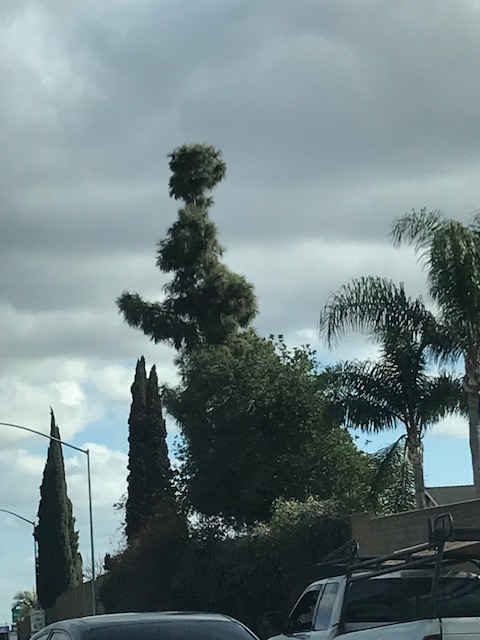
And lastly, here’s my favorite photo I took in 2025; some kind of Mary Poppins-lookin’ tree:
Happy 2026 everybody! Let’s hope it gets better, because worse would be really, really bad.
 Ben Loory